
Every HVAC business owner has had both kinds on their team. The good technician who shows up, fixes the problem, and moves on. And the one who does all of that but somehow leaves every customer feeling like they were actually taken care of. The calls don’t come back. The reviews are specific and enthusiastic. The homeowners ask for them by name.
What’s the actual difference?
It’s tempting to attribute it to personality. Some people are just naturally better with customers, the thinking goes, and some people are naturally more technical. But that framing undersells what’s really happening. The technicians who consistently perform at the highest level aren’t just friendlier or smarter. They’ve developed a particular combination of skills, habits, and professional instincts that good technicians often have in incomplete form.
Understanding that combination is useful whether you’re a technician trying to improve your own work or a business owner trying to build a team that performs at a higher level.
The Diagnostic Gap Is Bigger Than Most People Realize
Start with the technical side, because that’s where the foundation is.
A good HVAC technician can diagnose a broken component. They identify what failed, replace or repair it, verify the system runs, and close the job. That’s real competence and it shouldn’t be dismissed. But it’s also a surface-level process. It answers the question “what stopped working” without always answering “why did it stop working” or “what else is this failure telling me about the system.”
Great technicians approach a diagnostic differently. They’re collecting information before they’ve committed to a conclusion. They’re thinking about the system as a whole rather than hunting for the single failed part. When they find the obvious problem, they keep asking questions. What condition is the heat exchanger in? Is airflow balanced across the system? Does this failure point to an installation issue that will cause another failure in eighteen months?
This kind of diagnostic depth isn’t a personality trait. It’s a trained habit. Technicians develop it through formal instruction that teaches systematic methodology, through exposure to a wide range of equipment and failure types, and through the practice of asking more questions at every job rather than fewer.
Technical Knowledge Has a Shelf Life
Here’s something that doesn’t get said enough in the trades: what you learned to pass your certification exam is not sufficient for what you’ll face five years into your career. The equipment changes. High-efficiency systems have different failure profiles than the standard-efficiency units that dominated residential installation a decade ago. Smart thermostats and integrated controls introduce diagnostic complexity that didn’t exist in the curriculum most technicians studied.
Good technicians rely heavily on foundational training. It served them well early in their careers and it still produces adequate results on familiar equipment. But adequate isn’t the same as excellent, and adequate results on unfamiliar equipment can look a lot like competent guessing.
Great technicians treat professional development as ongoing rather than completed. They attend specialized training. They seek out instruction on the specific components and failure patterns they know they haven’t fully mastered. They don’t wait for a difficult job to expose a knowledge gap. They address gaps before they become problems in the field.
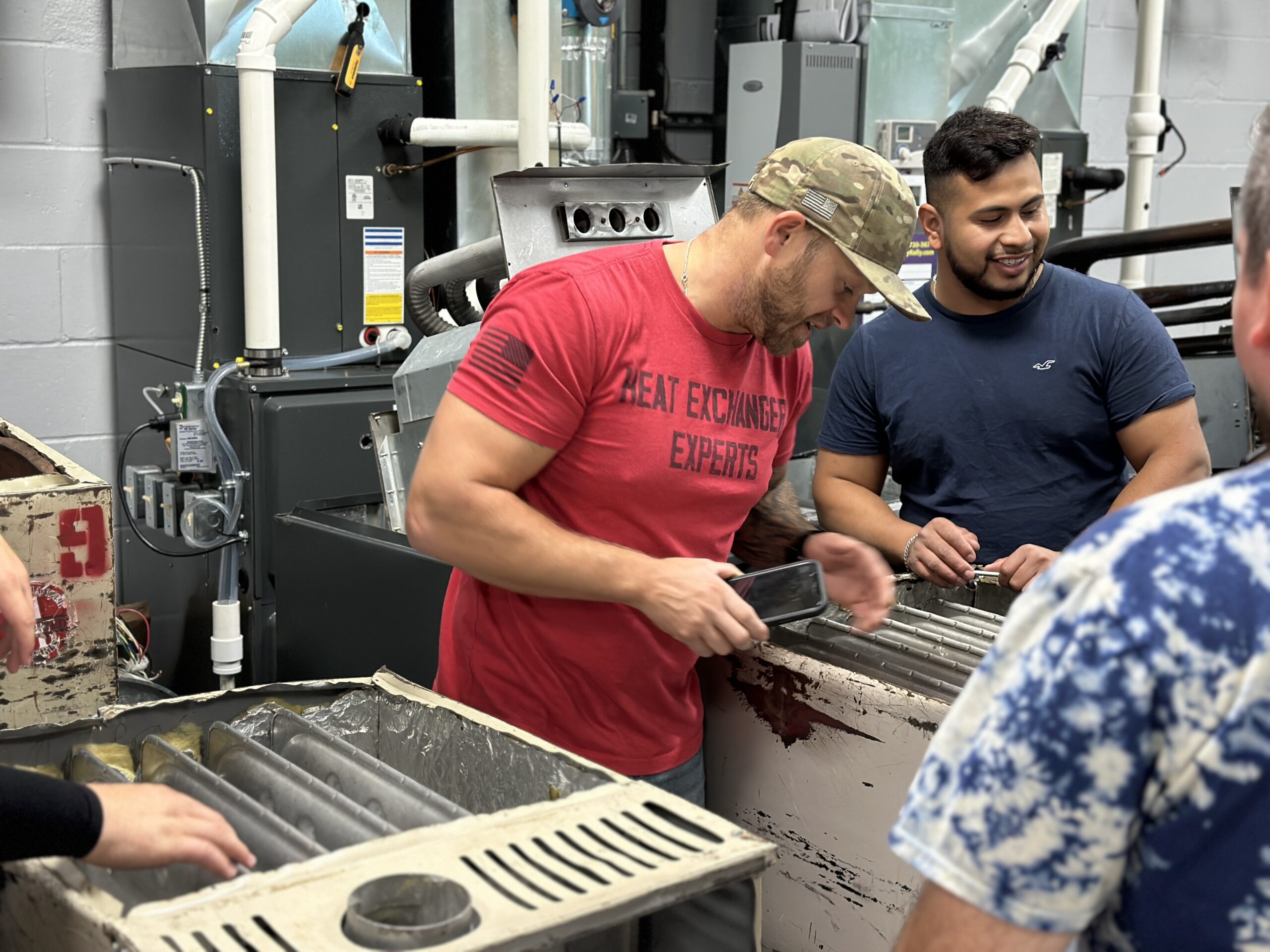
Heat exchanger inspection is a clear example. Most HVAC technicians receive general instruction on heat exchangers as part of their foundational training. Very few receive the kind of dedicated, hands-on instruction with real equipment across multiple manufacturers and configurations that develops genuine diagnostic confidence. The technicians who seek that training out are the ones who catch things others miss, and they’re the ones whose inspections hold up when they matter most.
Communication Is a Technical Skill, Not a Soft One
The HVAC industry has a tendency to separate “technical skills” from “communication skills” as though they belong to different categories. This separation doesn’t hold up in practice.
A technician who finds a cracked heat exchanger has done valuable technical work. What they do with that finding determines the actual outcome for the homeowner. If they communicate it poorly, using jargon the homeowner doesn’t understand, or presenting it in a way that feels alarming without being informative, or failing to clearly connect the finding to the safety implications, the homeowner may not act appropriately. That’s a failure of the inspection just as surely as missing the crack entirely would have been.
Good technicians can explain what they found. Great technicians can explain what they found, why it matters, what the options are, and what they would recommend, in language that leaves a homeowner feeling informed rather than overwhelmed or pressured.
This is a learnable skill. It develops through practice and intention, through seeking feedback on how explanations land with customers, and through specific training that addresses the communication side of technical findings rather than just the diagnostic side.
The Difference Between a Transaction and an Interaction
Every job a technician runs is also an interaction with a human being who opened their home, trusted the company with access to their mechanical systems, and probably had some level of anxiety about what was going to be found and what it was going to cost.
Good technicians complete the transaction competently. Great technicians acknowledge the interaction.
That doesn’t mean being overly familiar or spending an hour chatting when there’s a schedule to keep. It means things like explaining what you’re doing before you do it. Letting the homeowner know if something is going to take longer than expected. Leaving the space cleaner than you found it. Following up when you said you would.
These behaviors build the kind of trust that turns a one-time customer into a repeat customer and a repeat customer into a referral source. They’re also, notably, behaviors that reflect back on the company, not just the individual technician. When a homeowner tells their neighbor about the great HVAC company they use, what they’re usually describing is an experience that one technician created on one specific visit.
What Business Owners Can Actually Do About This
If you manage an HVAC team, the gap between good and great isn’t something you can close by hiring differently. Most technicians have the capacity to move in that direction. The question is whether the business creates the conditions for it.
A few things that actually move the needle:
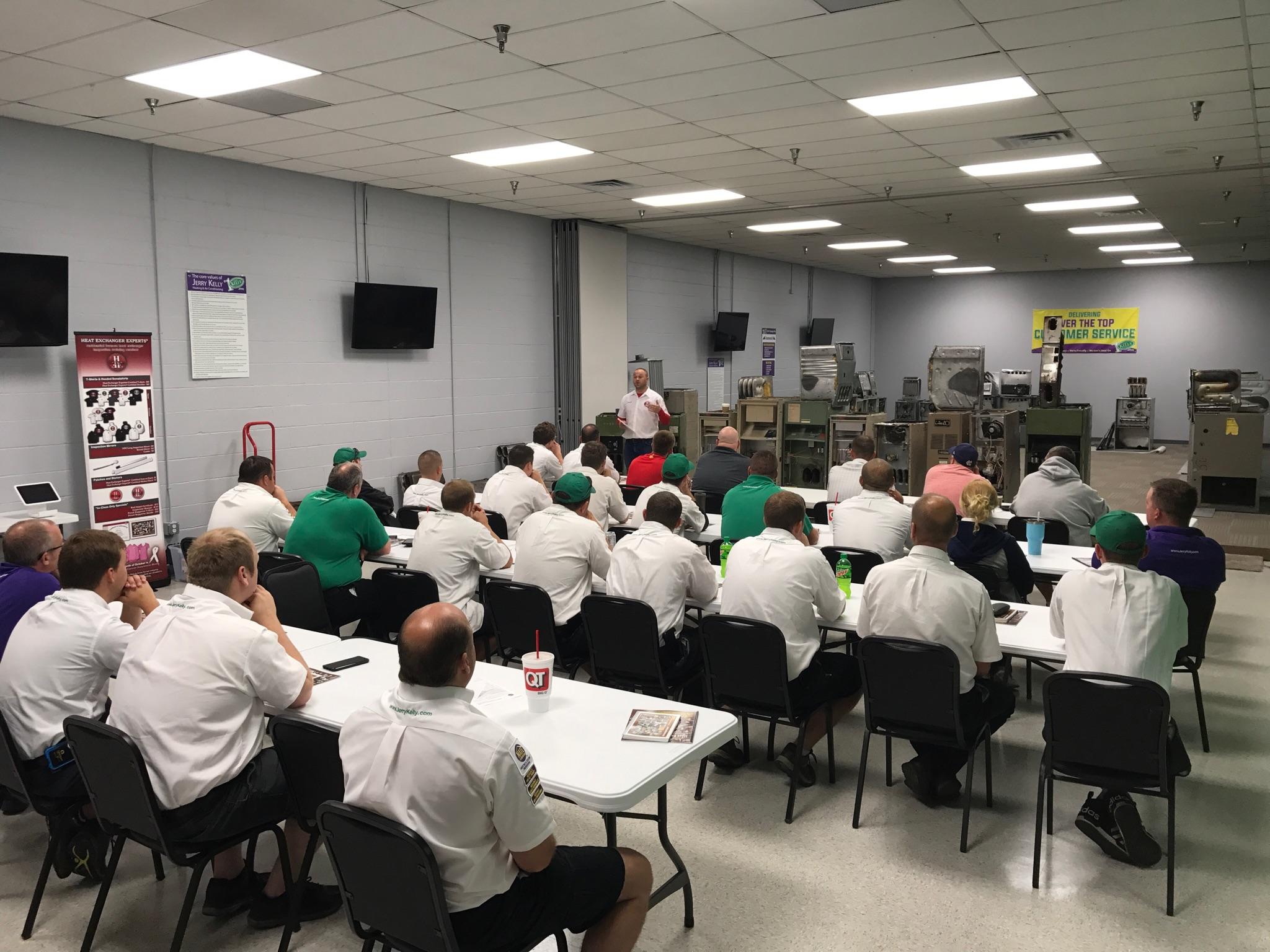
Invest in training that goes beyond certification maintenance. Specialized instruction in areas like heat exchanger inspection develops both technical depth and the diagnostic confidence that great technicians demonstrate. It’s also transferable across the team in a way that informal learning isn’t.
Create feedback loops. Technicians who receive specific feedback on inspections, customer interactions, and documentation quality improve faster than those who only hear about problems after something goes wrong. Build in the mechanism for that feedback to happen regularly.
Make professional development a visible priority. Technicians who see their employer investing in their growth respond differently than those who feel like the business only cares about billable hours. The connection between company investment in training and individual technician engagement is well established.
Set a documentation standard and hold to it. Great technicians document their findings specifically. Good ones often don’t, because nobody enforced the habit. A clear documentation standard, consistently applied, raises the floor across the team and makes quality control possible.
Frequently Asked Questions (FAQs)
Some do, over a long enough timeline and with enough varied experience. But informal learning has structural gaps that formal training addresses systematically. A technician who happens to encounter certain failure patterns in their service territory will develop expertise in those patterns. They won’t develop expertise in the ones they haven’t encountered. Structured training, particularly with real equipment across many configurations, fills those gaps deliberately rather than waiting for chance to fill them.
Heat exchanger inspection sits at the intersection of technical depth, systematic methodology, and customer communication, which are the three areas where great technicians most clearly separate from good ones. Training in this specific discipline develops all three simultaneously. A technician who learns to inspect heat exchangers thoroughly, document findings specifically, and communicate results clearly to homeowners is developing exactly the habits that characterize high-level work across all of their HVAC service.
Both, honestly. Technicians who take ownership of their professional growth tend to advance faster and perform better than those who wait for the company to push them. At the same time, companies that invest in structured training produce better teams than those that leave development entirely to individual initiative. The strongest outcomes happen when employer investment and individual motivation are both present.
Most technicians who attend focused, hands-on training report applying specific techniques from the very next day in the field. Deeper changes in diagnostic habit and inspection methodology typically become consistent over several weeks of practice. The knowledge transfer is fairly immediate. The habit formation takes repetition.
Prioritize programs that use real equipment rather than purely lecture or simulation. Technicians who have handled real heat exchangers in various stages of failure develop pattern recognition that classroom instruction alone cannot produce. Also look for programs led by instructors with genuine, long-term field experience rather than credential-based instruction without substantial hands-on background.
Build a Team of Technicians Who Perform at Their Best
The gap between good and great isn’t mysterious. It’s specific, it’s learnable, and it’s worth closing. Both for the technicians who want to build careers they’re genuinely proud of, and for the business owners who know what a high-performing team looks like when it’s firing on all cylinders.
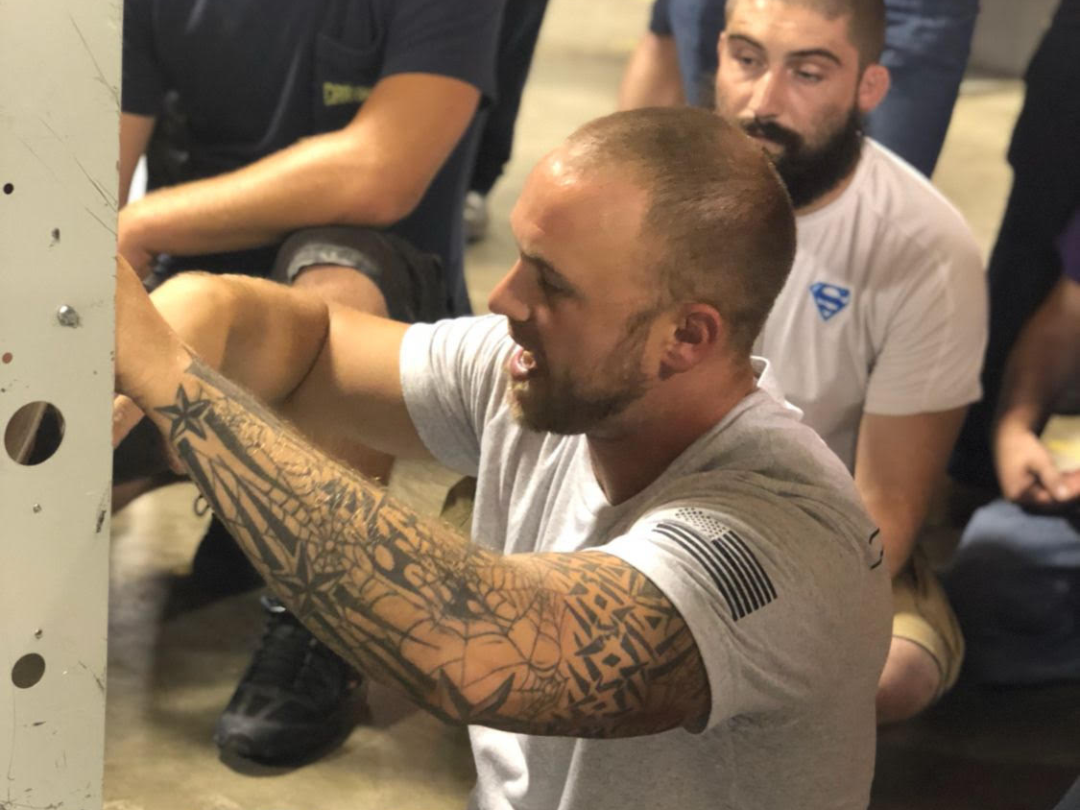
Heat Exchanger Experts runs one-day, open enrollment seminars built around the inspection skills, diagnostic methodology, and field knowledge that separate technically excellent technicians from merely adequate ones. With hands-on work across more than 70 real heat exchanger models and instruction from the Prach family with more than 55 years of combined industry experience, the training produces the kind of improvement you can see in your team’s work the following week.