
Heat Exchanger Training in Boxborough, MA

HVAC Inspection Seminars for Massachusetts Professionals Who Take Safety Seriously
New England Furnaces Don't Forgive Sloppy Inspections
Let’s be honest about something. Massachusetts winters are the kind that separate technicians who truly know what they’re doing from those who are running through the motions. A furnace that passes a rushed inspection in October can put a family at risk by February. And when that happens — when something gets missed — the liability doesn’t land on the manufacturer. It lands on the technician who signed off.
That’s the reality we built Heat Exchanger Experts around. Not fear, exactly. But a clear-eyed understanding that heat exchanger inspection is genuinely high-stakes work, and that the training most HVAC professionals receive doesn’t come close to reflecting that.
We’re bringing our one-day seminar to Boxborough, MA — and if you work in Middlesex County or anywhere across the MetroWest region, this is worth your attention.
What New England's Housing Stock Actually Demands From You
Boxborough sits in a part of Massachusetts where old colonial homes share neighborhoods with newer subdivisions, where a single service route might take a technician from a 1960s gravity-conversion furnace to a brand-new modulating system in the same afternoon. That range of equipment — different manufacturers, different heat exchanger designs, different ages and failure profiles — demands a level of diagnostic versatility that general HVAC training rarely develops.
Add the thermal demands of a genuine New England winter. Add the fact that Massachusetts homes are among the most tightly weatherized in the country, which means combustion byproduct intrusion from a cracked heat exchanger doesn’t dissipate — it accumulates. The case for specialized inspection training isn’t theoretical here. It’s written into the housing stock itself.
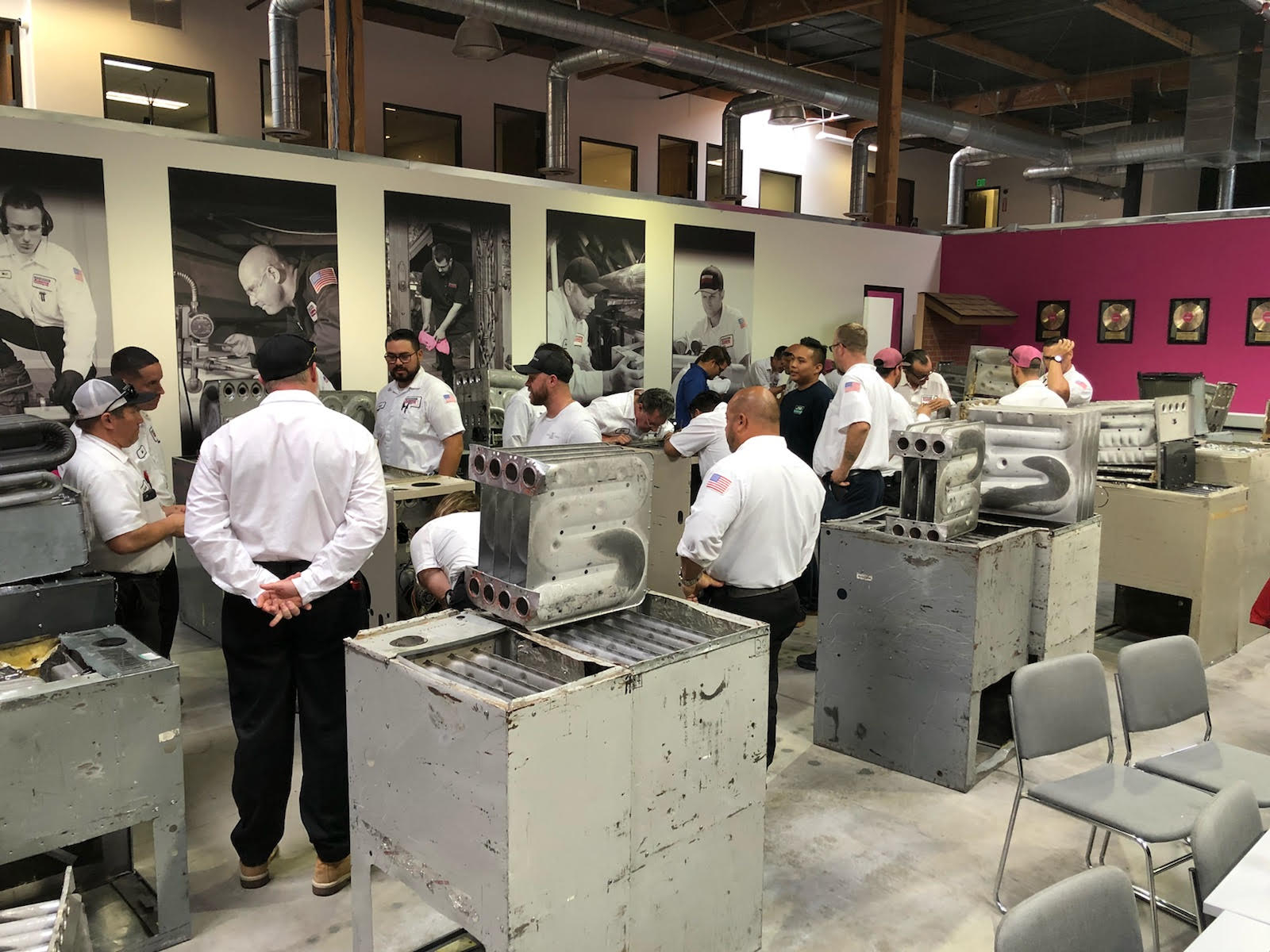
A Day That's Built Differently Than Any HVAC Course You've Taken
Eight hours. Over 70 real heat exchanger models. Instructors from the Prach family, who between them represent more than five decades of hands-on inspection work and HVAC safety education. No filler content, no tangents into refrigerant handling or electrical fundamentals. Just heat exchangers — how they’re built, how thermal transfer works through them, why they fail, and how to find the failures that matter before they become emergencies.
What participants learn to do:
- Read thermal transfer dynamics as a diagnostic tool, not just a physics concept
- Recognize how heat exchanger design decisions made at the manufacturing level create predictable failure points years later
- Move through an inspection with the kind of methodical consistency that produces the same reliable result every time — regardless of brand, age, or configuration
- Spot the early indicators of cracks, fatigue, and corrosion that precede the kind of failure a homeowner would notice
- Document findings in a way that protects the technician, protects the business, and gives the homeowner something they can act on
- Handle the conversation that follows a serious finding — clearly, calmly, and in a way that builds rather than damages trust
The manual every attendee takes home — written by Ellis Prach, the founder of this company — has been refined over decades of real field work. It’s not a course summary. It’s a working reference document that experienced technicians actually use.
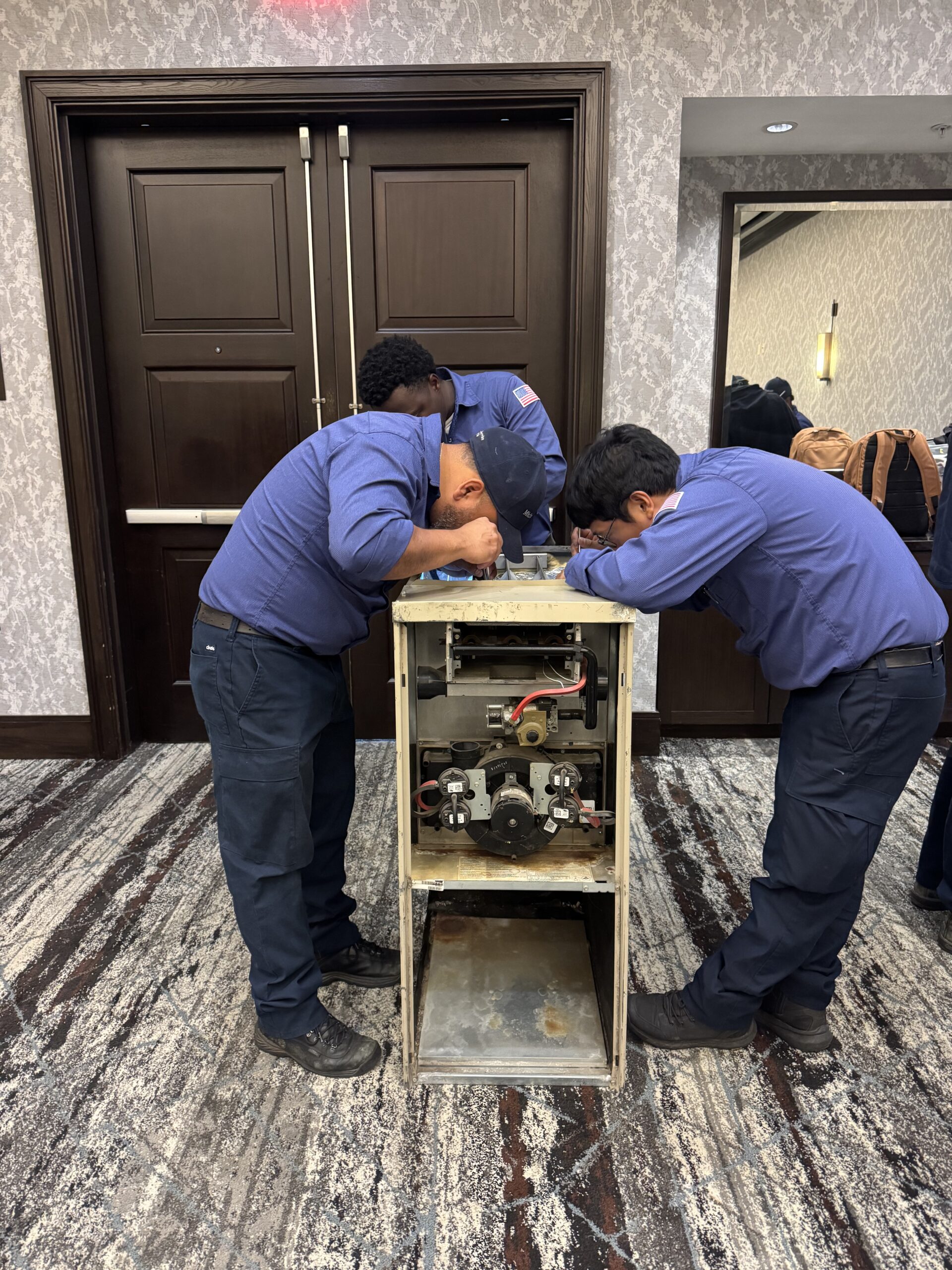
The Business Case Is Just as Strong as the Safety Case
We talk a lot about HVAC safety — and we mean every word of it. But let’s also talk about what this training does for your business, because that matters too.
An HVAC company whose technicians can perform genuinely thorough, well-documented heat exchanger inspections operates differently than one that can’t. Customer callbacks drop. Liability exposure shrinks. The conversations technicians have with homeowners after an inspection carry more authority and produce better outcomes — for the homeowner and for the service ticket.
In a market like MetroWest Massachusetts, where word-of-mouth reputation travels fast through tight-knit communities, the difference between a company known for thoroughness and one known for speed often comes down to exactly this kind of specialized training.
This seminar aligns with NATE certification preparation, ESCO Institute standards, and Type II requirements — supporting Massachusetts continuing education and licensing needs. As always, confirm your specific documentation requirements with the Massachusetts Division of Professional Licensure before attending.
Who We Built This For
Honestly? We built it for the technician who’s good at their job and knows there’s more to learn. And for the business owner who’s tired of not knowing whether their crews are inspecting furnaces the right way or just the fast way. Beyond that, the seminar consistently delivers value for:
- Technicians who encounter a wide range of heat exchanger models across older New England housing and newer residential construction
- Apprentices in Massachusetts HVAC programs who want field-applicable skills that complement their classroom instruction
- Journeymen with solid general competency who are ready to develop genuine specialization
- Licensed professionals who want continuing education that actually improves their work, not just checks a box
- Multi-technician operations where inconsistent inspection standards create uneven customer experiences
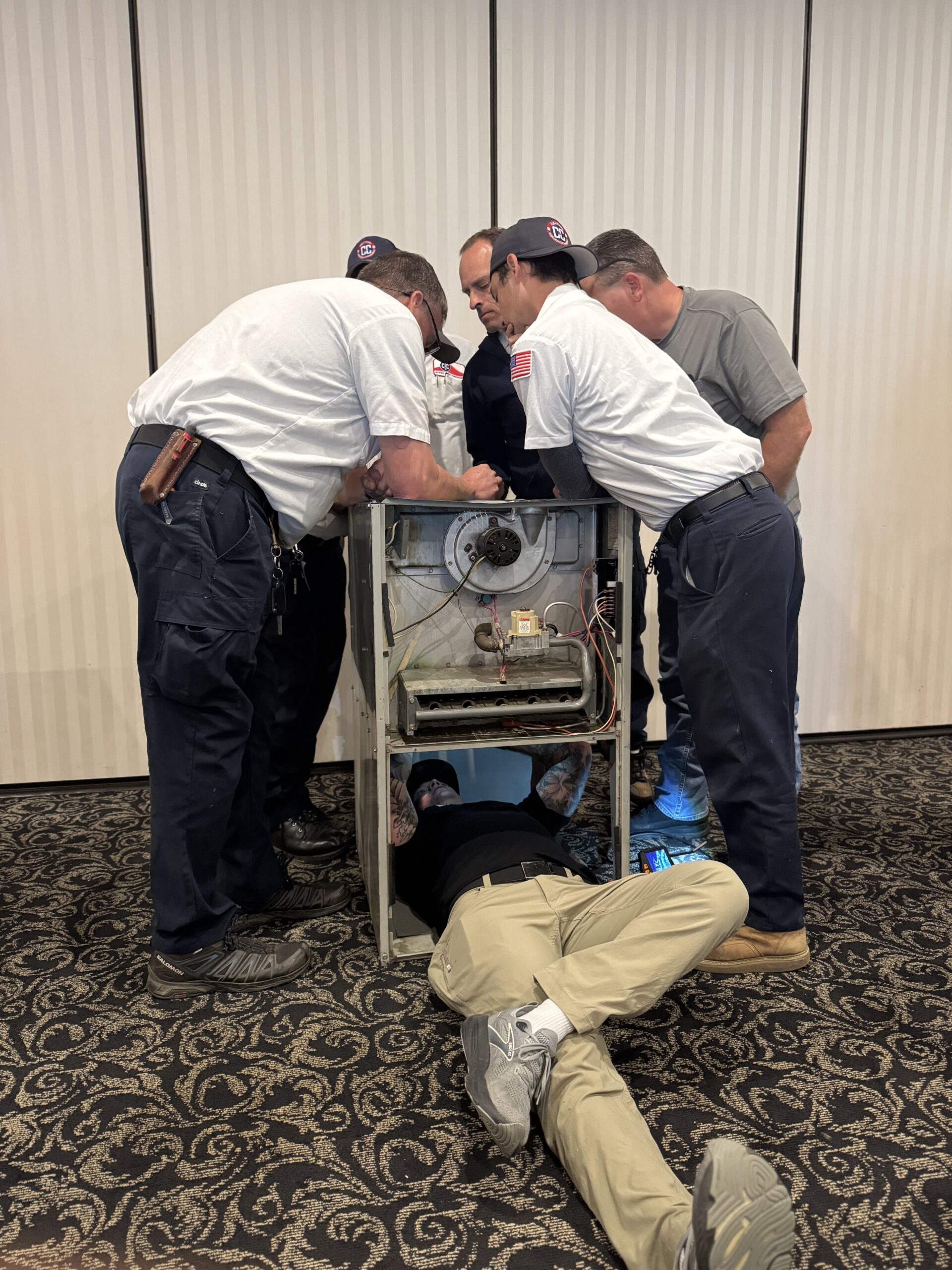
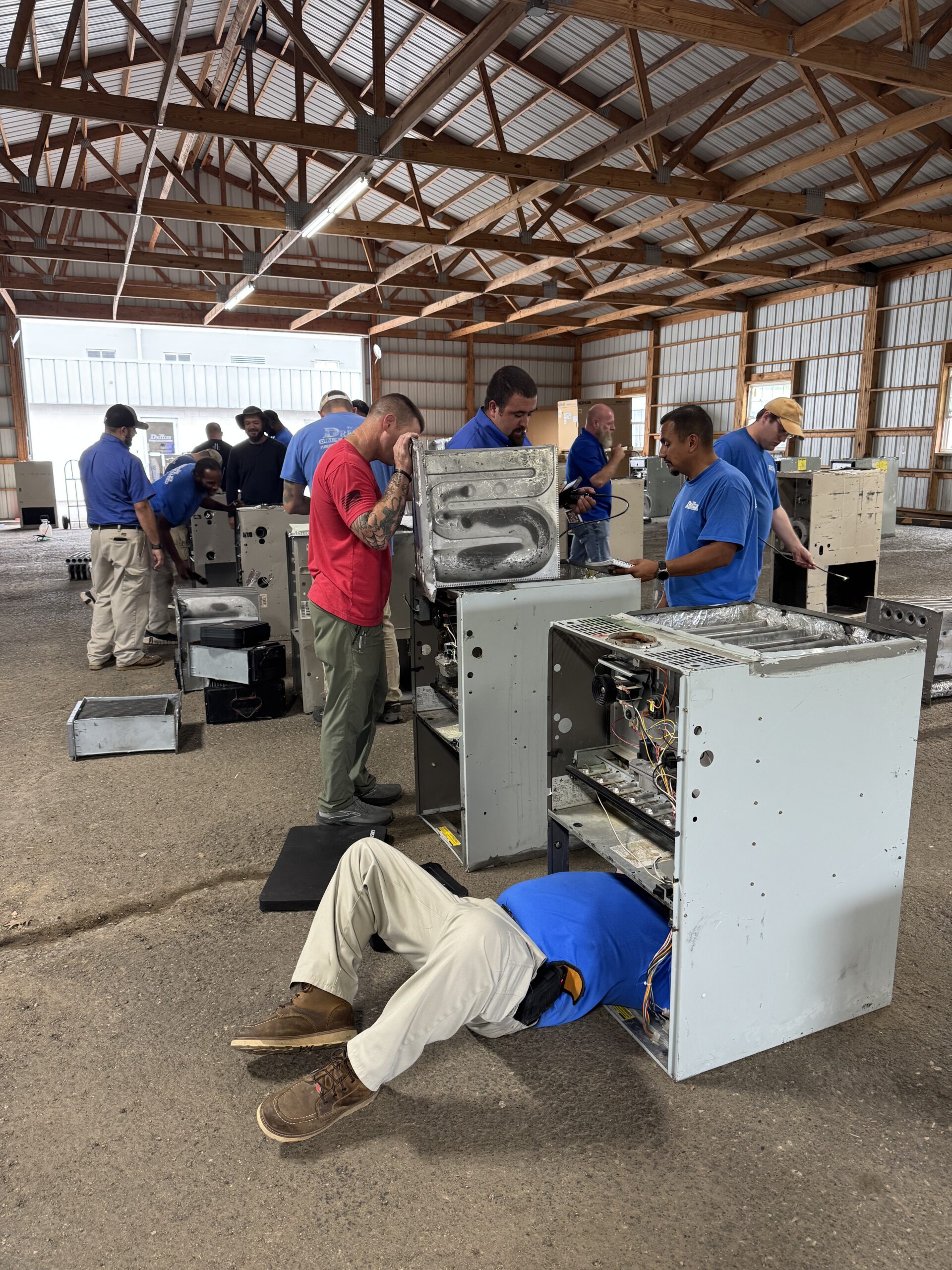
What the Day Looks Like
Arrive in Boxborough ready to work with your hands. The morning opens with foundational instruction on heat exchanger design and how thermal transfer principles connect to real failure scenarios. From there, the day moves into the equipment — dozens of real units, real failure patterns, real instructor guidance on what you’re seeing and why it matters.
Lunch is provided. So is breakfast. The Q&A sessions throughout the day are genuinely open — bring the cases that have puzzled you, the inspections that didn’t add up, the failure you found once and haven’t been able to explain. The instructors have seen most of it.
You leave with the inspection manual, a certificate of completion, and — if our past attendees are any indication — a noticeably different perspective on what a thorough heat exchanger inspection actually looks like.
Frequently Asked Questions
Don't Let Another Heating Season Start Without This
The MetroWest region’s HVAC market is competitive. Homeowners have options, and the companies that earn long-term loyalty are the ones whose technicians show up, do thorough work, and explain what they found in plain language. That’s what this training builds.
One day in Boxborough. Real equipment, real instruction, real professional development that you’ll feel the next time you open a furnace cabinet.
Seats fill quickly — register now and come prepared to leave a better inspector than you arrived.